Charge Sensor Manufacturer,Supplier and Exporter in India
Product Code : EL-TWL-11822
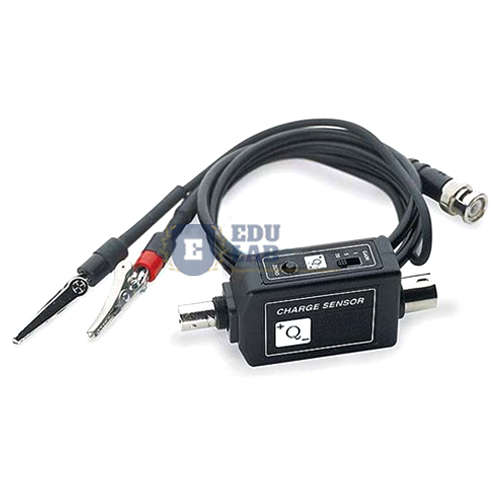
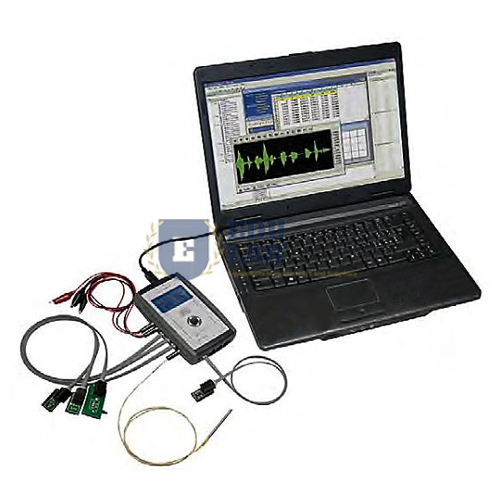
Quick Answer: The Charge Sensor makes quantitative charge measurements and shows charge polarity, using a very high-impedance voltage sensor with a 0.01 microfarad input capacitor. It has three ranges and a zeroing switch that discharges the capacitor.
Last updated: October 2026
Key Features
Three ranges: +/- 0.5 V (+/- 5 nC), +/- 2 V (+/- 20 nC) and +/- 10 V (+/- 100 nC).
Measures both amount and polarity of charge.
Zeroing switch to discharge the input capacitor.
Maximum input +/- 150 V.
Typical bias input current 0.005 pA; time constant 0.1 s.
Technical Specifications
Specification
Value
Ranges
+/- 0.5 V (+/- 5 nC), +/- 2 V (+/- 20 nC), +/- 10 V (+/- 100 nC)
Maximum input
+/- 150 V
Input capacitance
0.01 microfarad
Typical bias input current
0.005 pA
Instrument time constant
0.1 s
About This Product
Putting numbers to electrostatics experiments – charging by induction, by friction and by contact – turns qualitative demonstrations into measurements. The zeroing switch clears the input capacitor between readings, and the range is chosen to suit the size of the charge.
Frequently Asked Questions
Which experiments is it used for?
Electrostatics experiments such as charging by induction, charging by friction and charging by contact, where it gives numerical values and shows polarity.
How is the sensor reset?
A zeroing switch discharges the 0.01 microfarad input capacitor.