Student Stereo Microscope Manufacturer,Supplier and Exporter in India
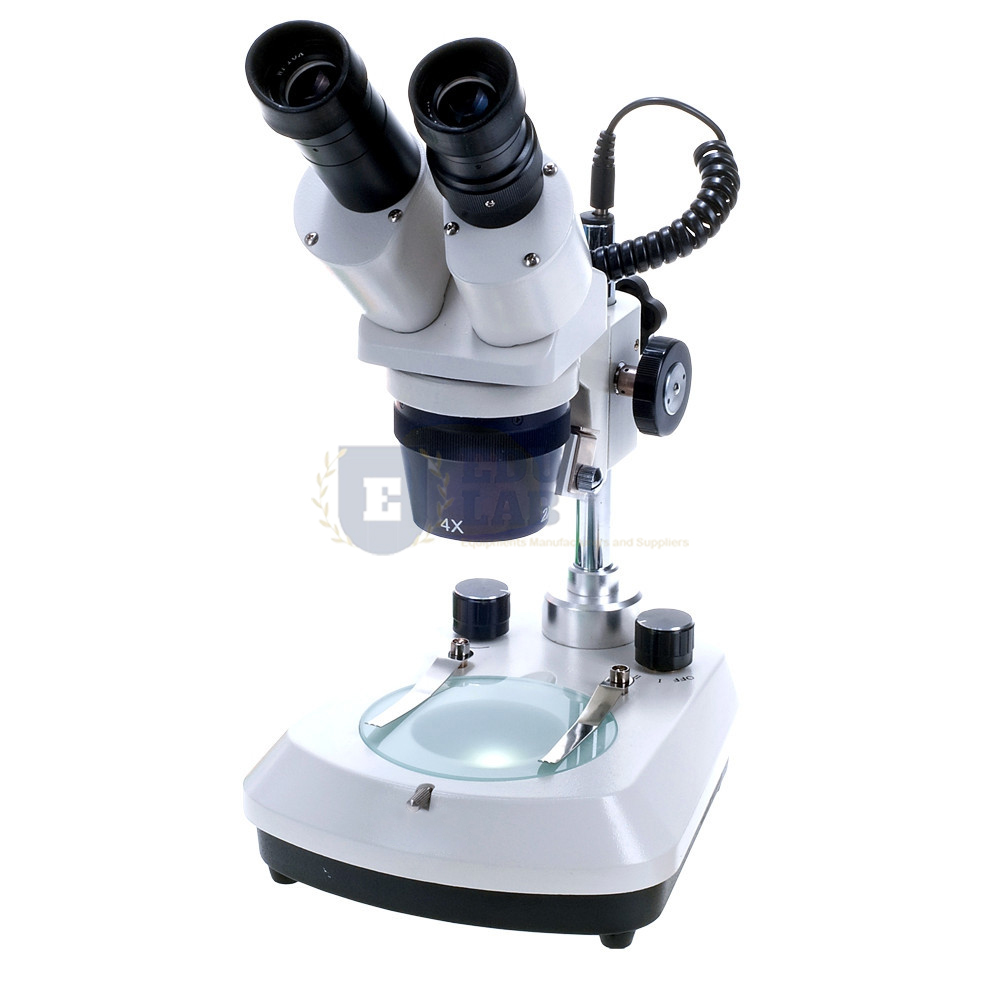
Product Code : EL-M-10977
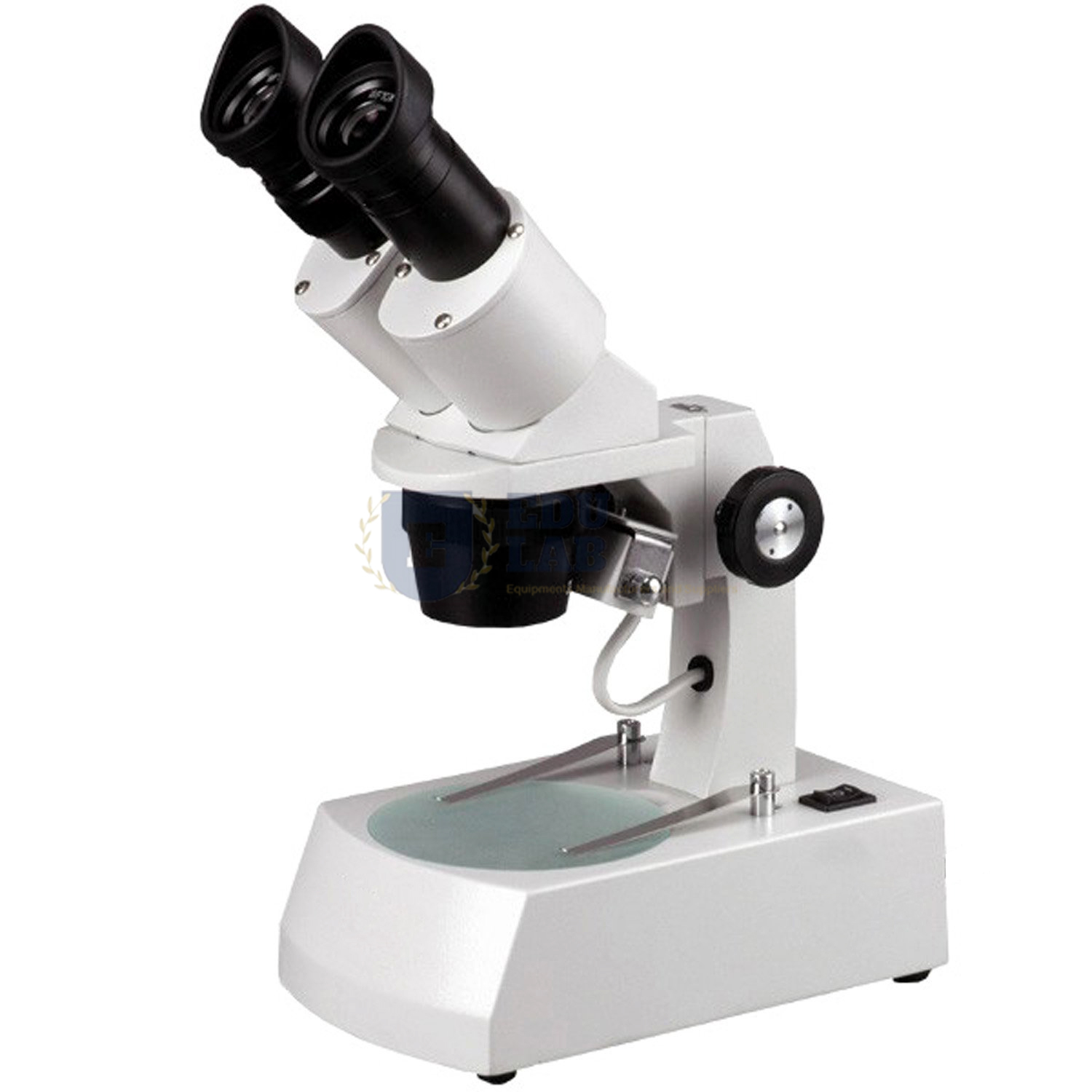
Quick Answer: The Student Stereo Microscope pairs two WF10x eyepieces with coated achromatic 2x and 4x objectives for 20x and 40x, and its head turns through 360 degrees.
Last updated: November 2026
Key Features
Two wide field WF10x eyepieces.
Achromatic, coated 2x and 4x objectives giving 20x and 40x.
Rubber eyeguards.
Interpupillary distance adjustable from 55 to 77 mm.
Diopter on the right eyepiece for focusing each eye separately.
Head rotates through 360 degrees and can swing around the pole for specimens too big for the stage.
Technical Specifications
| Specification | Value |
|---|---|
| Eyepieces | 2 x WF10x, rubber eyeguards |
| Objectives | Achromatic, coated, 2x and 4x |
| Magnification | 20x and 40x |
| Interpupillary distance | 55–77 mm |
| Diopter | Right eyepiece |
| Head rotation | 360 degrees |
About This Product
Changing magnification is a matter of twisting the objective housing until it stops on the 2x or the 4x objective. Because the head can also be turned around the pole, larger objects that will not fit on the stage can still be examined, and the right-eye diopter lets each student set focus to suit their own eyes. The Student Stereo Microscope can be dispatched from India to Italy, Oman, South Korea, Sierra Leone, Eritrea and Tunisia.
Frequently Asked Questions
How do you switch between 20x and 40x?
Twist the objective housing until it stops on the other objective. With the WF10x eyepieces, the 2x objective gives 20x and the 4x objective gives 40x.
Can it view specimens larger than the stage?
Yes. Besides rotating through 360 degrees, the head can be turned around the pole, so objects that do not fit on the stage can still be viewed.
What is useful alongside the Student Stereo Microscope for dissection and botany?
A Rack For Petri Dishes for culture dishes, Acrylic Magnifier Boxes for small specimens, and the Universal Smartphone Optics Adapter for photographing through the eyepiece.
When should I choose the Student Stereo Microscope instead of a compound microscope?
Choose a stereo or dissecting microscope for solid, opaque objects that need a three-dimensional view and room to work underneath, such as dissections, plant parts or circuit boards. Use a compound microscope for thin specimens on slides at higher magnification.
Related: Microscopes, Plastic Stereo Microscope, Binocular Stereo Zoom Microscope, Student Compound Microscope.
For a quotation on the Student Stereo Microscope, contact Educational Lab Equipments.