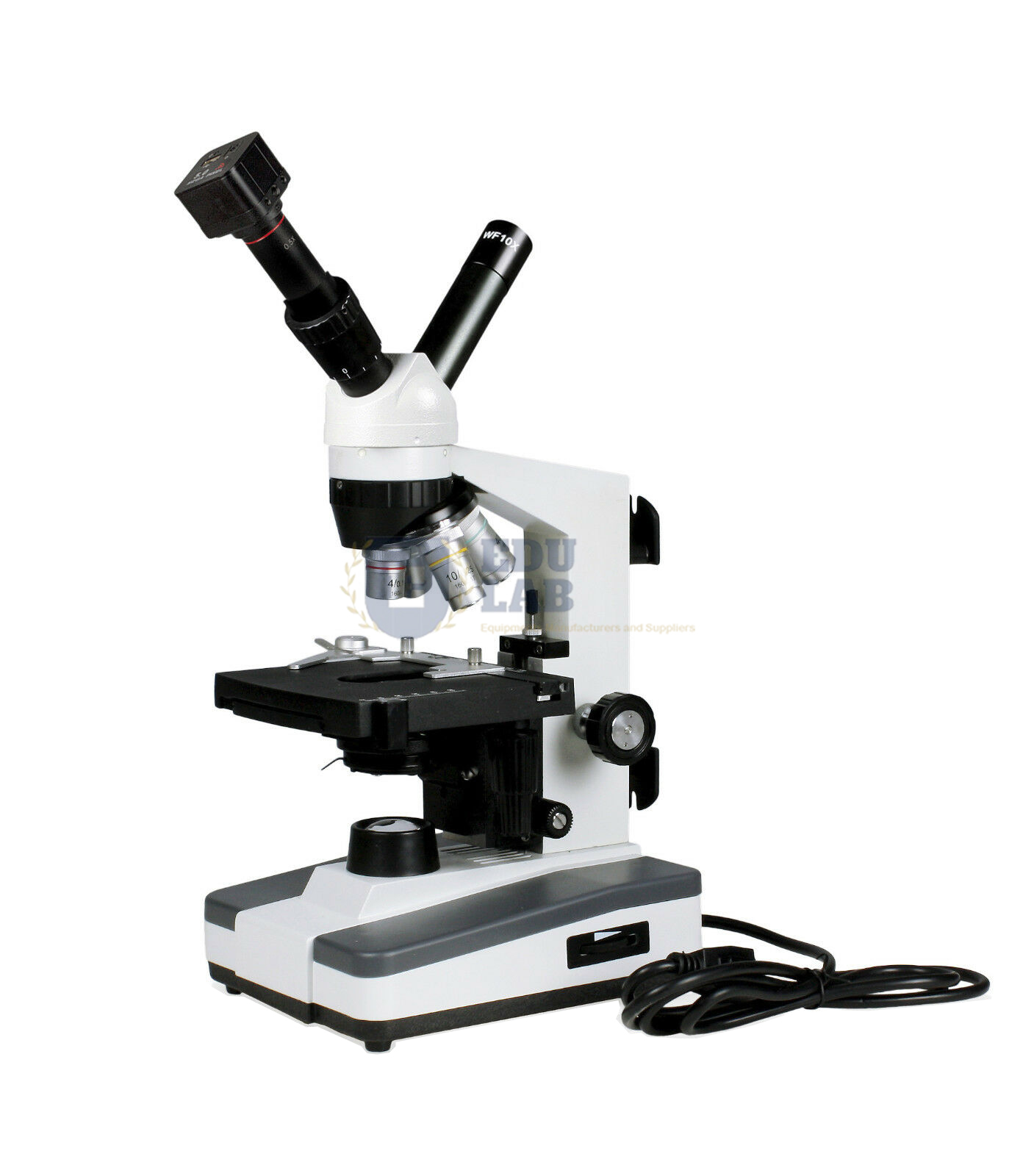
Binocular Research Microscope Manufacturer,Supplier and Exporter in India

Product Code : EL-M-10987
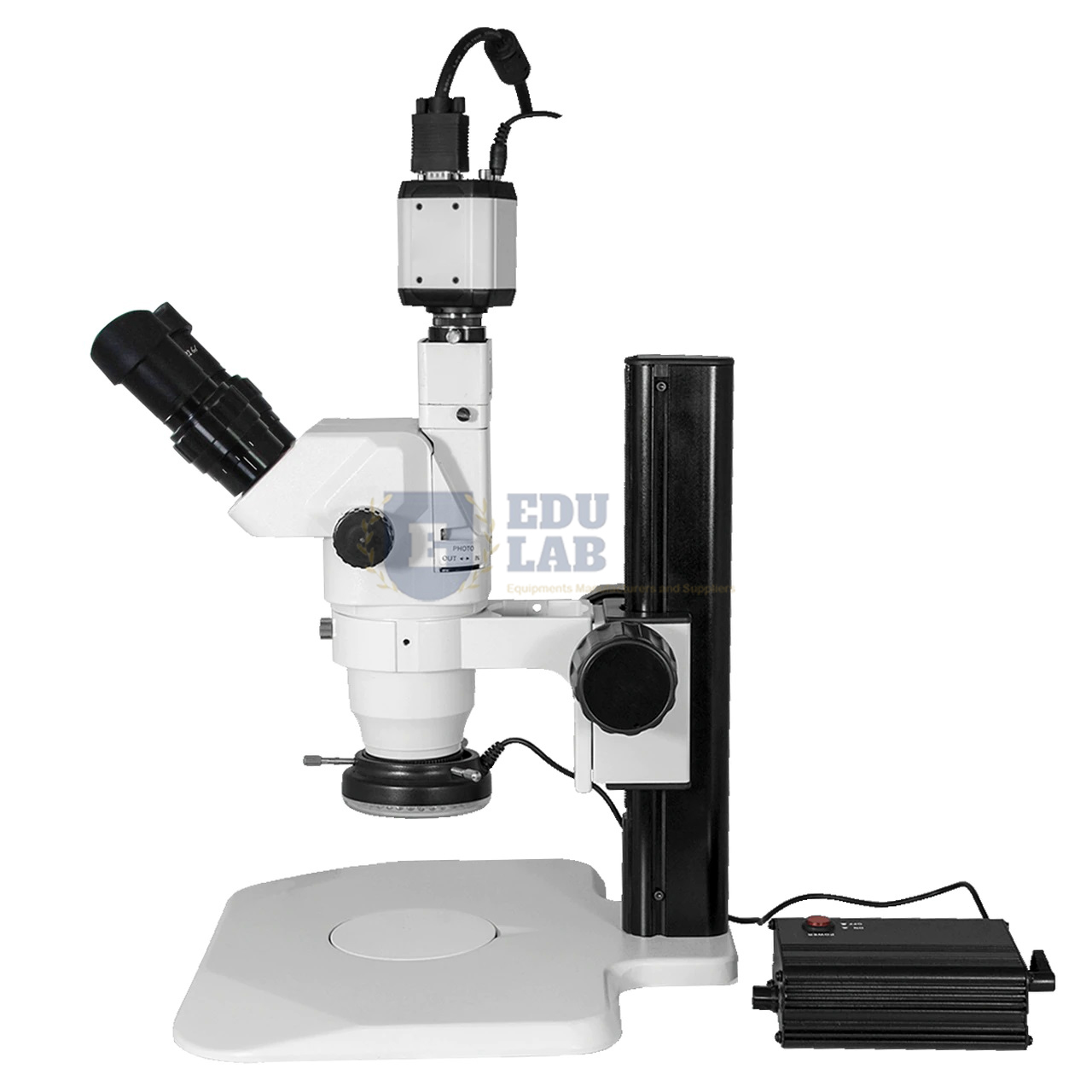
Quick Answer: The Binocular Research Microscope has a 45 degree inclined binocular head rotatable through 360 degrees, a 6V–20W halogen lamp and achromatic objectives from 4x to 100x oil immersion.
Last updated: November 2026
Key Features
45 degree inclined binocular head, rotatable through 360 degrees.
6V–20W halogen lamp for 220/110 V supply, plus mirror attachment for daylight work.
Achromatic 4x, 10x, 40x SL and 100x SL oil-immersion objectives.
Quadruple nosepiece with accurate centring and positive click stops.
Eyepieces: any two pairs from WF 10x, H5x, H6x and H15x.
Built-in graduated mechanical stage, 135 x 120 mm, with low coaxial controls scanning 50 x 75 mm.
Technical Specifications
| Specification | Value |
|---|---|
| Head | Binocular, 45 degree inclined, 360 degree rotatable |
| Illumination | 6V–20W halogen, 220/110 V; mirror for daylight |
| Objectives | Achromatic 4x, 10x, 40x SL, 100x SL oil |
| Nosepiece | Quadruple, click stops |
| Eyepieces | WF 10x, H5x, H6x, H15x – any two pairs |
| Stage | Graduated mechanical, 135 x 120 mm |
| Scanning range | 50 x 75 mm |
About This Product
Four achromatic objectives sit on the click-stop quadruple nosepiece, taking the user from a 4x overview to 100x oil-immersion detail. Slides are scanned over a 50 x 75 mm area with low-set coaxial drives, and the mirror attachment allows work by daylight when the halogen lamp is not in use.
Frequently Asked Questions
Which eyepieces come with the Binocular Research Microscope?
Any two pairs from wide field WF 10x, H5x, H6x and H15x.
What power supply does the lamp need?
The 6V–20W halogen lamp is offered for 220/110 V mains, and a mirror attachment is listed for working in daylight.
How large is the stage?
It is a built-in graduated mechanical stage of 135 x 120 mm with low coaxial drive controls that move the slide over a 50 x 75 mm range.
Which accessories suit the Binocular Research Microscope for teaching and documentation?
A Digital Eyepiece Camera for capturing images, a Stage Micrometer for calibration, and prepared slides such as Chromosomes (400x) and Bacteria (1000x, gram stain) for demonstrations.
Who is the Binocular Research Microscope suited to?
Laboratories and teaching departments that need to share or record what is seen, for example when one teacher demonstrates to a group, or when images are kept for reports and practical records.
Related: Microscopes, Advanced Monocular Research Microscope, Trinocular Research Microscope, Binocular Microscope.
For a quotation on the Binocular Research Microscope, contact Educational Lab Equipments.